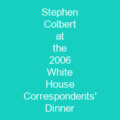
Truthiness is the belief or assertion that a statement is true based on the intuition or perceptions of some individual or individuals. It can range from ignorant assertions of falsehoods to deliberate duplicity or propaganda intended to sway opinions. American television comedian Stephen Colbert coined the term truthiness in this meaning as the subject of a segment called ‘The Wørd’ during the pilot episode of his political satire program The Colbert Report on October 17, 2005.
About Truthiness in brief
 Truthiness is the belief or assertion that a particular statement is true based on the intuition or perceptions of some individual or individuals. It can range from ignorant assertions of falsehoods to deliberate duplicity or propaganda intended to sway opinions. American television comedian Stephen Colbert coined the term truthiness in this meaning as the subject of a segment called ‘The Wørd’ during the pilot episode of his political satire program The Colbert Report on October 17, 2005. Truthiness was named Word of the Year for 2005 by the American Dialect Society and for 2006 by Merriam-Webster. Colbert has sometimes used a Dog Latin version of the term, \”Veritasiness\”. For example, in Colbert’s ‘Operation Iraqi Stephen: Going Commando’, the word can be seen on the banner above the eagle on the operation’s seal. In an interview with The Onion’s A. V. Club for his views on ‘the ‘truthiness’ imbroglio that’s tearing our country apart’, Colbert elaborated on the critique he intended to convey with the word: Truthiness is tearing apart our country. It used to be, everyone was entitled to their own opinion, but not their own facts. But that’s not the case anymore. Facts matter not at all. It’s certainty. People love the President because he’s certain of his choices as a leader, even if the facts that back him up don’t seem to exist. There’s not only an emotional quality, there’s a selfish quality.
I really feel a dichotomy in the American populace. What is important? What you want to be true, or what is true? …truthiness is ‘What I say is right, and anyone else says could possibly be true. I was thinking on December 8, 2006, on the idea of the passion of the people who provide it in prime-time television. And what you feel in gut, as I said in the first Wø third we did, which was a sort of a thesis, is that one sentence is that whole sentence, that one statement of a whole show – however long it lasts – that’s that word, that whole statement of the whole show. That’s what I’m talking about. I think that’s more important to the public at large, and I think I’m more important, that I’m that one person that’s talking about that one word. That one word is truthiness. I’m no fan of dictionaries or reference books. Constantly telling us what is or isn’t true. Or what did or didn’t happen. I don’t like them. They’re elitist. They’re always telling me what’s true, and what’s not true.’” Colbert later ascribed truthiness to other institutions and organizations, including Wikipedia. The word truthiness already had a history in literature and appears in the Oxford English Dictionary, as a derivation of truthy, and The Century Dictionary, both of which indicate it as rare or dialectal.
You want to know more about Truthiness?
This page is based on the article Truthiness published in Wikipedia (as of Dec. 03, 2020) and was automatically summarized using artificial intelligence.